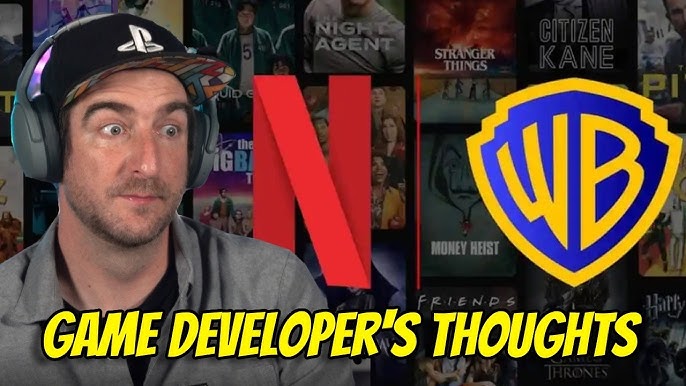
The recent blockbuster bid by Netflix to acquire Warner Bros. Discovery (WBD) has captured headlines — yet it turns out that the gaming side of the deal, despite being a major talking point in media coverage, was not a true priority for Netflix. According to Netflix executives, video games from WB Games were considered “relatively minor” in the valuation and strategic planning of the acquisition. Wccftech+2Insider Gaming+2
Even though WB Games includes major franchises such as Hogwarts Legacy, Mortal Kombat, Batman: Arkham (via Rocksteady), and multiple LEGO licensed games, Netflix’s leadership has admitted that — at least initially — they didn’t assign any meaningful value to that division when building their acquisition model. Pocket Gamer+2TweakTown+2
As a result: although the acquisition (if finalized) would technically bring those assets under Netflix’s control, gaming was not the driving force — the company’s focus remained overwhelmingly on film, television, and streaming content. The Guardian+2Kotaku+2
Why Netflix Downplayed WB Games
1. Streaming and film libraries remain core business
Netflix’s core value proposition — for subscribers and investors alike — has always centered on video streaming: movies, series, and exclusive content. The acquisition’s main appeal lies in gaining access to WBD’s rich studio legacy, their film/TV catalog, and popular IPs (like DC comics, Harry Potter, HBO libraries, etc.). The Guardian+2Wikipedia+2
2. History shows Netflix’s gaming ambitions are modest
Even before the deal, Netflix’s prior attempts at building a serious gaming business have been inconsistent. The company previously cancelled a AAA multiplayer shooter and shut down one of its game studios, signaling that games were never treated as a core vertical. Kotaku+2Insider Gaming+2
3. Valuation model excluded gaming value — considered “minor”
During the negotiations and investor calls, Netflix’s co-CEO, Gregory K. Peters, stated quite plainly that WB Games was not built into their valuation calculus. Although the team acknowledged the quality and popularity of franchises like Hogwarts Legacy, they admitted that they didn’t count them in the deal’s worth. Wccftech+1
4. Games seen as a potential “add-on,” not core asset
Even Netflix admits there may be opportunities down the line to leverage WB Games’ franchises — but for now, they see them as peripheral. For example, Peters said that these game studios might fit “into what we offer,” but reiterated that they were not part of the “get-go” valuation. Pocket Gamer+1
What This Means for the Gaming Industry & Fans
🎮 Gaming assets may get sidelined
With Netflix not prioritizing games in their acquisition motives, there is concern that WB Games — despite its strong roster — could be deprioritized or underfunded as Netflix focuses on its core streaming business. Some in the gaming community already expect potential “hemorrhaging” or at least lack of meaningful investment post-merger. EventHubs+2Insider Gaming+2
🧩 Uncertainty about future of major franchises
Franchises including Hogwarts Legacy, Mortal Kombat, Batman: Arkham, and LEGO games could face an uncertain future under Netflix’s ownership. While the games division technically transfers, what Netflix chooses to do with studios, IPs, and ongoing projects is unclear — and gaming fans may have to wait (or hope) for direction.
📺 Streaming remains top priority — games may not shape Netflix’s future
This move reinforces a broader reality: Netflix views games as secondary to its main revenue model. Their focus likely remains on growing their film/TV library, leveraging big-name franchises, and driving subscriptions — not building a game-first ecosystem.
🔎 But there’s “latent potential” if Netflix changes course
On the flip side: by owning a huge catalog of popular gaming IPs and studios, Netflix holds a latent opportunity. If the company ever decides to commit to gaming — with investment, proper support, and integration — the combination of global platform, cross-media IPs (movies, shows, games) could become powerful. Peters even hinted they’re “excited” about that possibility. Wccftech+2Insider Gaming+2
The Bigger Picture: What This Deal Actually Was (and Wasn’t)
The acquisition by Netflix of Warner Bros. (assuming regulatory and shareholder approval) is primarily a film and streaming play: gaining access to WBD’s studios, libraries, IPs, and global distribution — transforming Netflix into a massive movie + streaming powerhouse. The Guardian+2Wikipedia+2
Games — via WB Games — were included, but treated as a secondary add-on, not a pillar. For a company that has historically struggled to make games a core competency, this is unsurprising. Thus, gaming’s inclusion may end up being more symbolic than strategic — at least for now.
In short: while Netflix might officially “own” big gaming franchises and studios after the deal, it’s misleading to think that Netflix made or is making a major push into games with this takeover.
What Fans and Observers Should Watch Next
- Whether Netflix reallocates resources to WB Games — Will development budgets, studio support, and new game investments continue, or be scaled back?
- What happens to major upcoming titles and franchises — e.g. sequels, new entries, or cross-media adaptations (game ↔ streaming ↔ film).
- Whether Netflix’s strategy toward gaming changes — Could there be a pivot toward treating games as a real business line instead of a “nice to have”?
- Regulatory and corporate shakeups — As other bidders (like Paramount Skydance) compete, any structural reorganization might affect how WB Games is treated long-term.
Conclusion
Although Netflix is poised to acquire one of the biggest entertainment companies in the world — granting it access to some of the most powerful franchises across movies, TV, and games — the acquisition clearly is not about gaming. For Netflix, games were a footnote: a possible enhancement, not a reason for the deal.
For fans of WB Games’ franchises, this reality raises important questions about the future: whether beloved game series will continue to get the support they deserve, or whether they’ll become shelf-kept IPs under a streaming-first giant.